
What to Look for in a Pet Travel Water Bottle for Retail
A practical buyer guide to pet travel water bottle capacity, leak resistance, one-hand use, water return, materials, cleaning and retail sample checks.
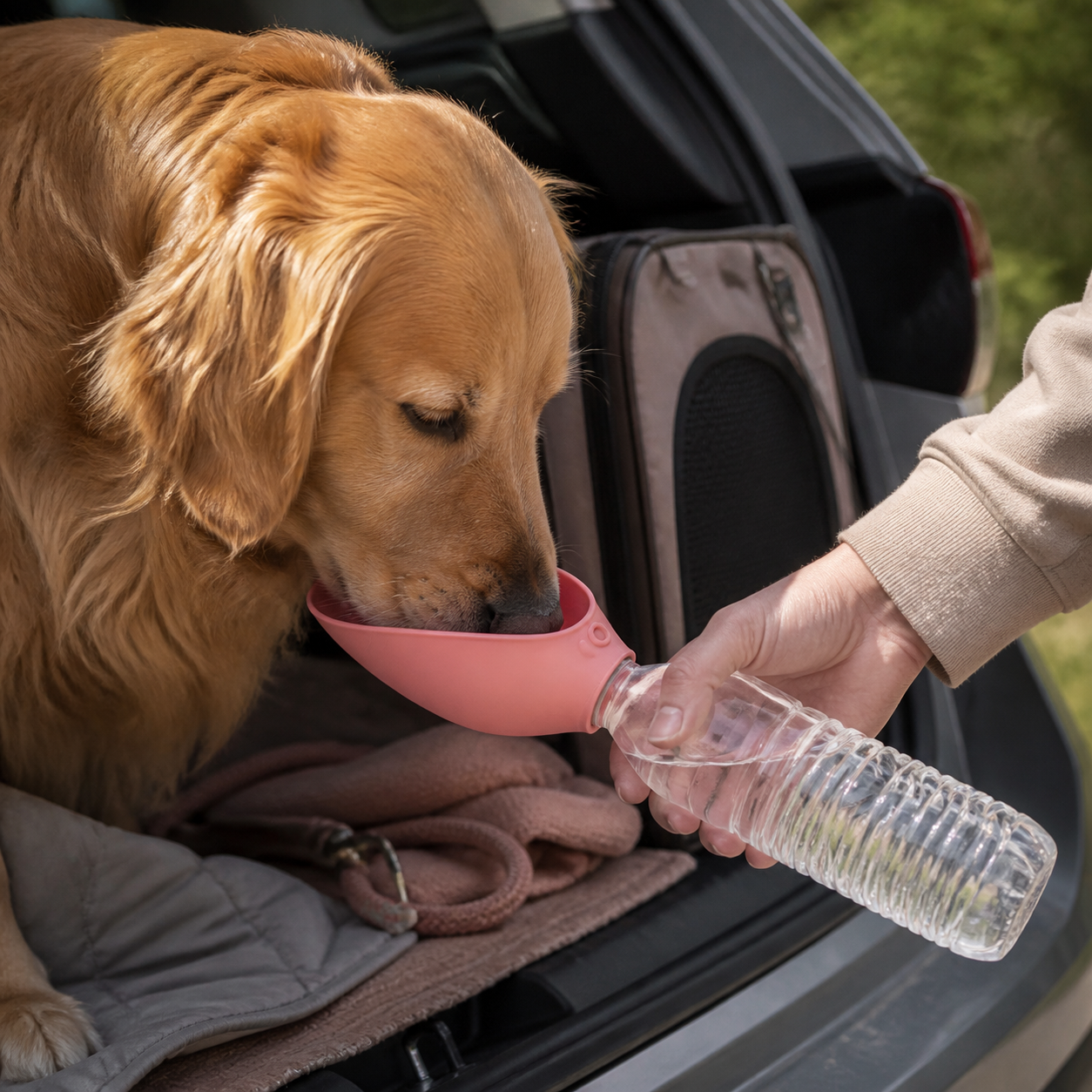
A pet travel water bottle looks simple on a product page, but small design decisions determine whether customers keep it in a day bag or stop using it after the first trip. Retail buyers should evaluate the complete drinking routine: carrying the bottle, opening it, serving water, returning unused water, cleaning the contact surfaces and storing it again without leaks.
Buyer Decision Summary
Use published product data to narrow a shortlist, then confirm model-specific details before ordering. Buyers comparing TROVANE’s two currently published formats can review the fact-based Outdoor Feeding comparison.
Compare From Published Product Data
Compare product format, published dimensions, published material descriptions, bowl or serving format, published colors, stated customization direction and intended use context. Do not use a listing to rank unverified performance.
Confirm Before Ordering
Confirm capacity, net weight, complete component and water-contact materials, closure or dispensing mechanism, cleaning instructions, packaging specification, logo method, MOQ, lead time and compliance documents where applicable for the selected model.
Validate With a Sample
Use a sample to review carrying, dispensing, serving access, closure operation, cleaning, drying, reassembly and transport-related moisture or leakage risk. For a structured leakage-risk sample review, see the existing leak-test framework.
Questions Buyers Commonly Need to Resolve
Use these direct answers to separate published product information from details that require supplier confirmation or sample review.
What should buyers compare first when sourcing portable pet water bottles?
Compare verified product format, dimensions, published material description, serving design and customization direction first. Do not begin by comparing capacity or leak performance when those details are not confirmed for the exact model.
Can dimensions be used to estimate bottle capacity?
No. Published dimensions alone should not be used to infer capacity. Confirm capacity for the exact model.
Can a product listing prove that a bottle is leak-proof?
No. Product descriptions or images alone are not evidence of leak performance. Evaluate leakage risk against documented product information and sample testing.
What material information should buyers request?
Use the published material description as a starting point, then request complete water-contact component material information for the selected model.
What should buyers include in an RFQ?
Include the target market, expected quantity, selected model, color, branding requirement, packaging requirement, capacity confirmation, material or document requirements and sample requirement.
Start with the trip the customer is actually taking
The right bottle for a twenty-minute neighbourhood walk may not be the right bottle for a highway rest stop or a full day on a trail. Before comparing capacities and features, define the main use case, the likely pet size and what else the customer will already be carrying.
For a compact urban range, low weight and one-hand operation may matter most. Road-trip customers may accept a larger bottle if it sits securely in a cup holder or door pocket. Hiking customers tend to notice attachment points, packed weight and how easily the bottle can be used without placing parts on the ground.
- Daily walks: quick access, light weight and reliable closure.
- Car travel: useful capacity, stable storage and low spill risk.
- Hiking and day trips: packability, grip and easy field cleaning.
- Multi-pet households: enough usable water without an awkward bottle.
Choose capacity as part of the carrying experience
Capacity is easy to compare, but the largest number is not automatically the strongest retail choice. A bottle that becomes bulky, top-heavy or difficult to hold may be left at home. Buyers should compare filled weight, body diameter, balance and the space taken up by the drinking section as well as the stated volume.
Check the usable volume, not only the label
Ask how much water the bottle holds when properly closed and whether the stated capacity includes space that cannot be dispensed easily. During sample testing, fill it to the normal operating level and observe how much remains inaccessible when the bottle is tilted at realistic angles.
Test it with one hand
A customer may be holding a leash, opening a car door or managing another bag. Buttons, locks and bowl sections should be reachable without requiring a complicated sequence. One-hand use is valuable only when the controls are also resistant to accidental activation in a bag.
Treat leak resistance as a system
A leak-resistant claim does not identify where failure can occur. The cap, button, valve, bottle thread, silicone seal and any rotating or folding connection all need to work together. A model can pass an upright check and still release water after being carried sideways or exposed to repeated movement.
For sample evaluation, fill the bottle, close it as an ordinary customer would and place it on absorbent paper in several orientations. Repeat the check after operating the valve many times and after washing. This is more informative than a single demonstration with a new, dry sample.
Look for clear locked and unlocked states
The control should give the user a clear visual or tactile signal. If the lock position is ambiguous, customers may assume a leak is a product defect when the real problem is unclear operation. Instructions should show the correct closed position without relying on dense text.
Inspect seals as service parts
Check whether a seal can twist, fall out or trap residue during cleaning. A tiny removable gasket may be easy to lose, while a fixed seal may be difficult to clean. The better choice depends on the design, but the maintenance expectation should be visible before the item reaches retail.
Evaluate the drinking and water-return design
The drinking area should give the intended pet enough access without creating excessive splash. Compare its width, depth and edge shape with the pet sizes in the range. A shallow trough may suit quick drinks but waste more water with a larger dog; a narrow shape may be compact but uncomfortable for broader muzzles.
A water-return function can reduce waste, especially on longer trips, but buyers should check how it works in practice. Does water return quickly? Can hair, dust or saliva enter the main reservoir? Is there a way to discard water instead when returning it would be undesirable? A feature is useful only when the customer can understand when and how to use it.
Material and cleaning details shape repeat use
Ask for the material specification for every part that contacts water or the pet. Avoid relying on a broad phrase such as “food grade” without knowing which component it describes and what documentation is available for the intended market. Surface feel, odour, colour consistency and resistance to scratching also affect customer perception when the bottle is unpacked.
Count the places that can trap residue
Deep channels, narrow valve openings, hidden hinges and layered silicone parts can slow cleaning. Buyers should disassemble only the parts the instructions tell the customer to remove, wash them with normal household tools and confirm that they dry fully before reassembly.
Check the foldable bowl through repeated cycles
On a bottle with a foldable silicone drinking bowl, expand and collapse the section repeatedly. Look for whitening, cracking, weak folds or a shape that does not stay open. The bowl should feel intentional in both positions rather than like an attachment that moves during use.
Common reasons a promising bottle creates complaints
Returns often come from the gap between a product image and the daily routine. A bottle may look compact when empty but feel heavy when filled. A lock may work but be difficult to read. A trough may serve water well but be awkward to clean. Packaging and product copy should set realistic expectations about capacity, dimensions, use and care.
- Leaking after the bottle is stored horizontally.
- A button that is stiff, unclear or easy to press accidentally.
- A drinking area that is too small for the advertised pet range.
- Residual water collecting around the valve or folding joint.
- An attachment loop that feels weak when the filled bottle is carried.
- Instructions that do not explain locking, returning water or cleaning.
A practical buyer checklist
Shortlist the model only after the sample has been carried, operated, washed and stored as a customer would use it. Record the result against the intended retail scenario rather than judging the bottle as a generic accessory.
- Confirm filled weight, usable capacity and packed dimensions.
- Test the closure and lock upright, sideways and after repeated use.
- Check one-hand operation while holding a leash.
- Review trough access for the intended dog or cat size range.
- Test water return and decide when customers should discard instead.
- Wash, dry and reassemble the bottle using normal household tools.
- Match instructions and packaging claims to the sample you approved.
Review a real product format in context
Buyers comparing an integrated bottle-and-bowl format can review TROVANE’s Portable Pet Water Bottle with Foldable Silicone Bowl. Use the page as a product reference, then confirm the exact sample, material, dimensions and operating details for your market before making a range decision.
For a larger 2-in-1 format, compare the 2-in-1 Pet Water Bottle with Foldable Feeding Bowl. Its published 28.5 × 7.5 cm plastic format and soft silicone bowl create a different carry and storage comparison; confirm the exact sample, colour, branding and packaging requirements before ordering.
For decisions that extend beyond one hydration item, the practical pet travel accessories buying guide provides a wider framework for use cases, samples, packaging and assortment planning.
Practical takeaway
Make the decision around real use
A strong pet travel water bottle makes a short, repeated routine feel easy. Capacity and appearance help a buyer build the shortlist, but leak behaviour, handling, drinking access and cleanability decide whether the product works after purchase. Test those details together and describe them accurately at retail.