
When Does a Portable Cat Litter Box Actually Make Sense?
A practical guide to when cat owners need a portable litter box for road trips, hotels, camping, temporary stays, moving and emergency backup.
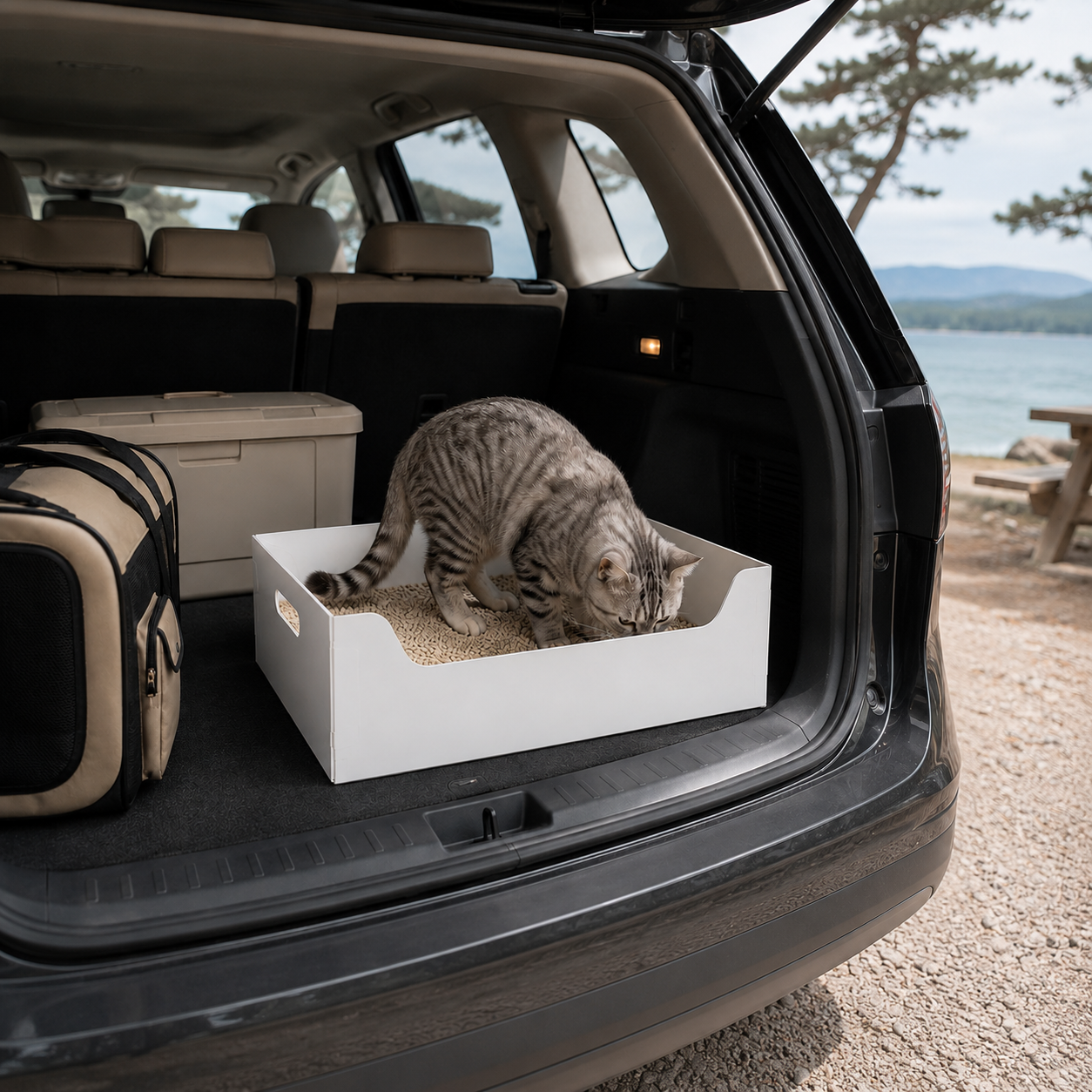
A portable litter box is not necessary for every outing. Its value appears when a cat will be away from the normal home setup long enough to need a familiar, manageable place for toileting. Buyers can merchandise this category more clearly when they distinguish repeat travel needs from one-time emergencies and disposable alternatives.
The product makes sense when the normal setup is unavailable
TROVANE’s Foldable Travel Cat Litter Box is presented for road trips, hotel stays, camping and emergency home use. Those scenarios share one need: a reusable box that can be stored between uses and set up when the cat’s normal litter area is not available.
The model is listed at 50 × 37 × 19 cm and uses waterproof PP. Those facts can help a buyer explain the format, but the purchasing decision should begin with frequency and duration. A customer travelling regularly has different expectations from someone preparing a single emergency kit.
Long-distance car travel and overnight stops
A short drive may not require a separate litter setup. A long journey, an overnight stop or an uncertain schedule can make a portable box more useful. The customer needs a planned location where the box can be set up while the vehicle is safely stopped or at the destination, not an assumption that it will be used freely inside a moving car.
For repeat road travel, reusable construction can reduce the need to find a new temporary container on every trip. Buyers should still explain storage for litter, waste bags, cleaning supplies and the dry box after use. The litter box is only one part of the travel routine.
Hotels, visiting family and temporary stays
Hotels and guest homes make containment and cleanup especially important. A portable box gives the cat a defined location, but customers also need a floor-protection plan and permission to use the space appropriately. Clear guidance is more useful than presenting the product as mess-free.
The same logic applies when visiting family, renovating a room or keeping a cat in a temporary area at home. A reusable box can be stored after the stay, while a disposable solution may be simpler when storage space is limited and the need is unlikely to return.
Moving house and emergency backup
Moving can separate the cat from the normal tray while rooms, vehicles and accommodation change. A portable box can keep one familiar piece of the routine available, especially when it is introduced before moving day rather than unpacked for the first time during disruption.
Emergency kits are another reasonable use case. Evacuation, an extra cat at home or temporary isolation may create an unexpected need for another litter area. Buyers should position the product as a practical backup, not as a guarantee that every cat will use an unfamiliar box immediately.
Camping requires more planning than portability
A compact box may be easy to carry, but camping also requires a stable, sheltered and responsible place to use it. Customers need to keep litter and waste contained, protect the box from weather and follow site rules. Portability does not remove the need for cleanup and disposal planning.
For occasional camping, packed size may be the deciding factor. For frequent trips, cleaning durability and reliable refolding may matter more. Buyers should avoid treating one format as equally suitable for a tent, camper van and open campsite without explaining the different setup expectations.
Reusable versus disposable is a frequency decision
A disposable tray or sturdy temporary container may be enough for one short stay. It avoids post-trip storage but creates waste and may offer limited structure. A reusable foldable box makes more sense when the customer travels repeatedly, wants a known setup or values having a backup ready at home.
Choose disposable when simplicity matters most
A single overnight stay, limited cleaning access or no long-term storage space can favour a temporary solution. Retailers should acknowledge that option rather than implying every customer needs a reusable product.
Choose reusable when the routine will repeat
Regular car travel, recurring hotel stays, camping or emergency preparation can justify a foldable box. The customer must still be willing to empty, clean, dry and store it correctly between uses.
Portability and stability have to be balanced
The smallest folded package is not always the most useful box. Reducing structure can make setup less stable, while a rigid design can take too much luggage space. Buyers should compare packed size with the usable open area and observe whether the walls remain in position after litter is added.
Storage between trips is part of the value proposition. The box needs to be fully dry, protected from dust and easy to find with other pet travel supplies. If the customer has nowhere to store it, the convenience claim becomes weaker after the first trip.
Help customers decide whether they need one
A useful product page or retail display can ask a few simple questions instead of relying on a long feature list.
- Will the cat be away from the normal litter box overnight?
- Is the need likely to happen more than once?
- Is there a stable, permitted place to set up and clean the box?
- Can the customer carry litter and waste supplies as well?
- Does the cat have time to become familiar with the box before travel?
- Is there dry storage available between trips?
- Would a disposable option be more practical for this one situation?
Separate use-case planning from product evaluation
Once the customer need is clear, buyers can use What to Look for in a Travel Litter Box for Cats to review dimensions, containment, waterproof material, cleaning and sample checks. The two decisions are related, but deciding whether the category is needed should come before comparing specifications.
Practical takeaway
Make the decision around real use
A portable cat litter box makes the most sense for repeat travel, overnight stays, temporary accommodation, moving and emergency backup. It is less compelling when the need is brief, disposable options are adequate or the customer cannot clean and store the product afterward. Clear use-case guidance helps buyers set realistic expectations before discussing features.