
What Retail Buyers Should Check Before Choosing a Retractable Dog Leash
A practical guide to retractable leash mechanism, brake and lock control, handle comfort, length, hardware, casing and sample testing.
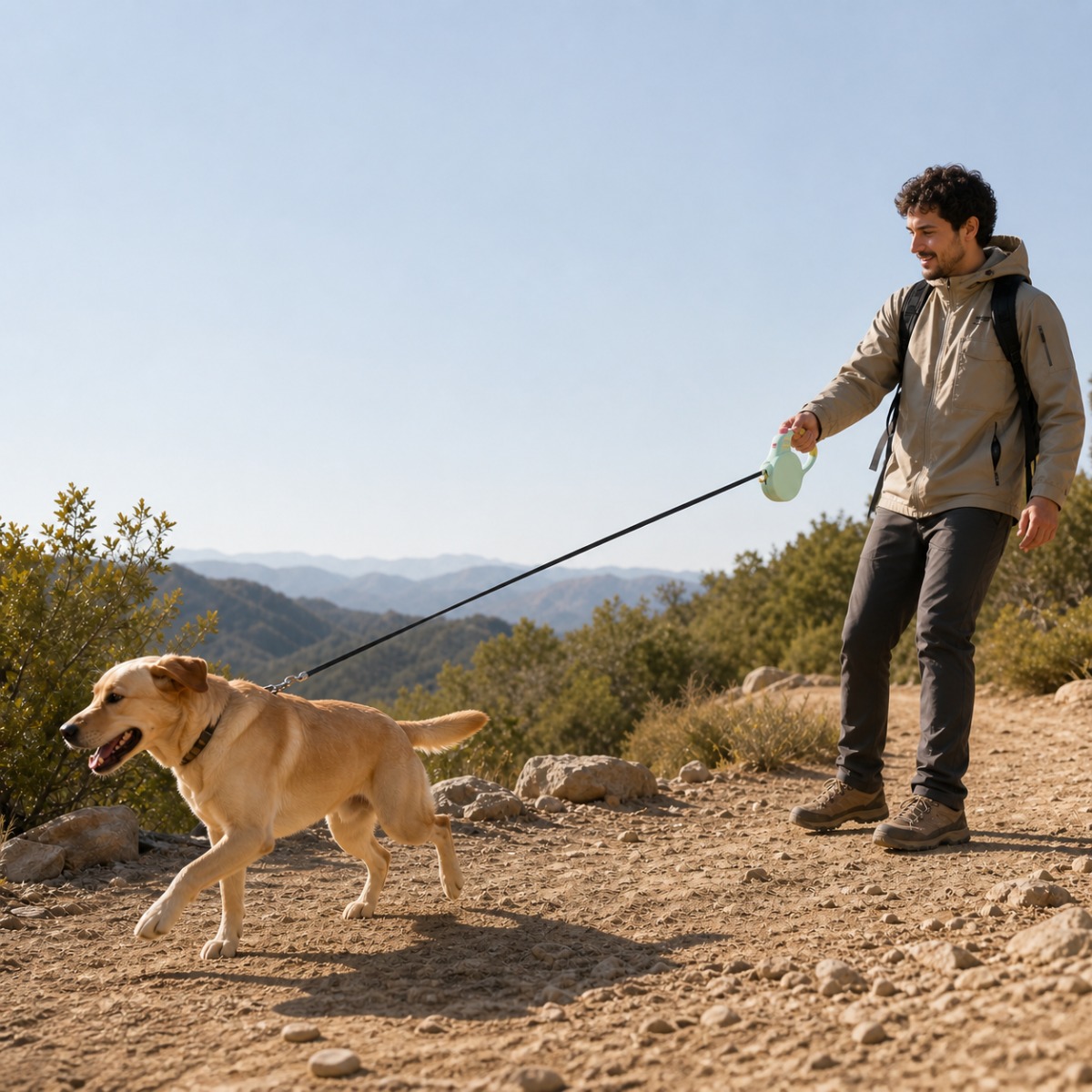
A retractable leash is defined by how it feels after repeated extension, braking and return. A polished casing can make a strong first impression, but customers notice hesitation, noise, grip discomfort and unreliable control quickly. Buyers should test the mechanism as a complete walking tool and avoid assuming one model suits every dog or environment.
Start with the stated model, not the category name
TROVANE’s Automatic Retractable Dog Leash for Outdoor Walking is specified with an ABS casing, nylon webbing, alloy hardware and a one-button brake-and-lock control. The page lists a 13.5 × 9.9 × 3.9 cm body and leash length options of 3 m and 5 m.
The overview and short description refer specifically to a 3 m leash, while the dimensions field lists both 3 m and 5 m. Buyers should therefore confirm which length applies to the exact sample and quotation. This kind of detail should be resolved before a listing is created, not left for the customer to interpret.
The mechanism should feel consistent throughout the range
Extend the leash slowly, quickly and at several angles. The line should feed without repeated catching, and retraction should remain controlled as the available length changes. Listen for grinding, clicking or a sudden change in spring tension.
A clean demonstration with no load is only the first check. Use an appropriate controlled test load for the sample, cycle the mechanism repeatedly and inspect how the line enters the casing. The opening should not create excessive abrasion or allow the webbing to bunch at the edge.
Brake and lock controls need separate tests
A one-button system may combine temporary braking and continuous locking, but customers need to understand the difference immediately. Check the force needed to press, hold, release and lock the control while gripping the handle normally.
Repeat the test with different hand sizes and with the leash extended. A control that feels easy on a display sample may become awkward during a moving walk. The locked state should be visually or tactically clear so the customer is not relying on guesswork.
Handle comfort is more than a soft-touch surface
The product page describes an ergonomic handle and soft-touch grip details. Buyers should still assess the internal opening, edge shape, finger clearance and balance of the casing. A comfortable finish cannot compensate for a grip that is too small, too wide or difficult to hold securely.
Try different grip positions
Walk, brake and change direction while holding the sample naturally. Check whether the control stays reachable without shifting the hand and whether seams or hard edges create pressure after several minutes.
Review casing size against portability
The 13.5 × 9.9 × 3.9 cm dimensions give a useful body-size reference. Compare that with the customer’s likely pocket, bag or storage hook. A compact appearance in photos does not always translate into convenient carry between walks.
Length and dog suitability need clear limits
A longer leash creates more roaming distance but can also change control, tangling and awareness in busy spaces. Buyers should decide whether the 3 m or 5 m option matches daily pavements, parks or more open environments. Length should be presented as a use-case choice, not automatically as an upgrade.
The current public page does not state a dog-weight rating. Do not infer one from the casing size or hardware appearance. Request and verify the intended pet-size range for the exact model before adding suitability claims. The page also mentions dogs and cats, but the listing should explain the intended walking context rather than imply the product suits every animal.
Inspect the connection from casing to hook
Follow the product from the internal reel to the line exit, webbing, end stop and alloy hook. Check stitching or joining at the terminal end, hook-gate movement and rotation under normal handling. Small inconsistencies at these transitions can become more noticeable after repeated extension.
Inspect the ABS casing for gaps, sharp edges, rattling and movement between halves. Drop or impact performance should not be claimed without evidence, but buyers can still check ordinary knocks, surface marking and whether the casing remains aligned after normal sample handling.
Daily walking is not the same as every outdoor setting
The product is positioned for daily walks, parks and outdoor activities. A buyer should define where retractable control is appropriate for the target customer and make sure instructions address awareness around other people, animals and obstacles. Busy pavements and open spaces create different handling needs.
Yellow-green, orange and green are listed colour options. Bright casing colour can improve shelf visibility, but it does not confirm that the leash itself is reflective or visible in low light. Avoid converting colour into an unsupported visibility claim.
Common failure points and return risks
Returns often follow a mismatch between a smooth new sample and the customer’s repeated walking routine. Buyers should focus on the motions that happen hundreds of times rather than the first extension.
- Retraction becomes slow, noisy or uneven.
- The brake button is stiff or the lock state is unclear.
- Webbing rubs, twists or bunches at the casing opening.
- The handle is uncomfortable for the customer’s hand size.
- The listed length does not match the delivered option.
- The hook gate sticks or the terminal stitching looks inconsistent.
- Suitability claims are broader than the documented model rating.
A practical sample checklist
Use more than one sample when possible and record the exact length, colour and configuration. Mechanism consistency across units matters as much as the performance of the best sample.
- Confirm whether the model is 3 m or 5 m across all documents.
- Cycle extension, retraction, braking and locking repeatedly.
- Test the controls with different hand sizes and grip positions.
- Inspect nylon webbing, line exit, end stop and alloy hook.
- Check ABS casing alignment, surface finish and internal noise.
- Verify the intended pet-size range instead of assuming it.
- Keep colour and outdoor-use statements separate from reflective claims.
Practical takeaway
Make the decision around real use
A retractable leash should feel predictable through repeated extension, braking, locking and return. Buyers should resolve the exact length, verify the intended pet-size range and inspect the mechanism, grip, webbing, hook and casing together. A precise product description is more useful than claiming one leash works for every dog and every walk.